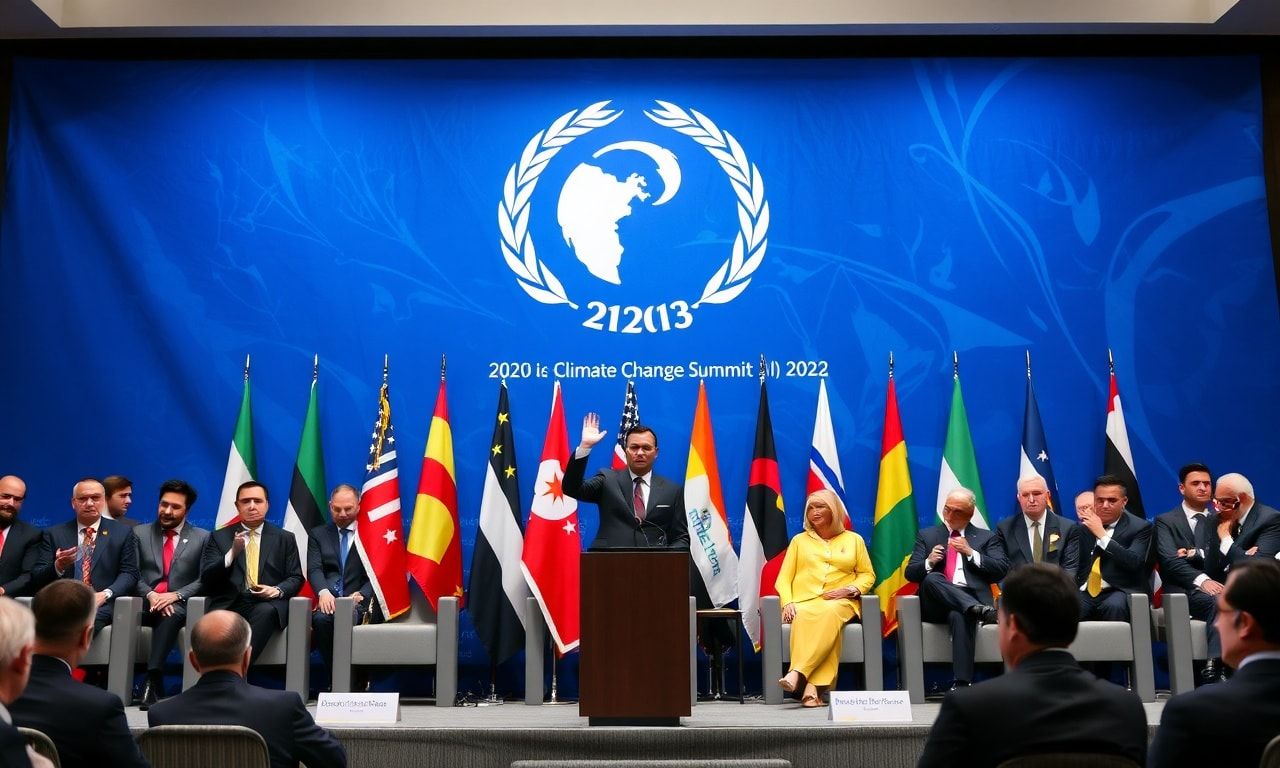
The Gathering Storm: World Leaders Address Climate Change
The international community has descended upon the bustling city of New York for the annual Climate Change Summit, a pivotal event that brings together heads of state, environmental activists, and industry leaders to discuss the pressing issue of global warming. This year’s summit is particularly significant, as it coincides with a series of natural disasters that have underscored the urgency of the climate crisis.
The summit opened with a keynote address by United Nations Secretary-General António Guterres, who warned of the dire consequences of inaction. “The clock is ticking,” he stated, “and we must act now to avert a climate catastrophe.” His words set the tone for the proceedings, which are expected to focus on renewable energy, carbon reduction, and international cooperation.
Key Agenda Items and Discussions
The agenda for this year’s summit is packed with critical discussions and debates. Topics range from the implementation of the Paris Agreement to the role of technology in mitigating climate change. One of the most anticipated sessions is the panel on “Financing the Green Transition,” which will explore ways to mobilize financial resources for sustainable development.
In addition to the formal discussions, the summit will also feature a series of side events, including exhibitions showcasing innovative green technologies and workshops on climate resilience. These events provide an opportunity for participants to engage with the latest developments in the field and to network with like-minded individuals.
The Role of Technology in Combating Climate Change
Technology is increasingly seen as a key player in the fight against climate change. From renewable energy sources like solar and wind power to advanced carbon capture and storage technologies, innovation is driving the transition to a low-carbon economy. At the summit, experts will discuss the latest breakthroughs and their potential impact on global efforts to reduce greenhouse gas emissions.
One of the most promising areas of technological advancement is the development of smart grids, which use digital technology to monitor and manage the distribution of electricity. These grids can help to integrate renewable energy sources into the power supply, making it more reliable and efficient. Additionally, advancements in battery storage technology are enabling the storage of excess energy generated from renewable sources, ensuring a steady supply even when the sun isn’t shining or the wind isn’t blowing.
International Cooperation and Political Challenges
While technological solutions are crucial, international cooperation is equally important in addressing the climate crisis. The summit provides a platform for countries to come together and negotiate agreements that will help to reduce global emissions. However, political challenges and differing national interests can make these negotiations complex and contentious.
For instance, the breaking news update today highlights the ongoing tensions between developed and developing nations over the issue of climate finance. Developed countries are often criticized for not providing enough financial support to help developing nations transition to renewable energy sources. This issue is expected to be a major point of discussion at the summit, with calls for increased funding and more equitable distribution of resources.
Despite these challenges, there is a growing recognition of the need for collective action. The summit serves as a reminder that the fight against climate change is a global effort, and that no single country can tackle this issue alone. By working together, the international community can make significant progress towards a sustainable future.
The Way Forward: Hope and Action
As the summit draws to a close, participants will be looking ahead to the next steps in the fight against climate change. The discussions and agreements reached at the summit will set the stage for future action, both at the national and international levels. It is clear that the road ahead is challenging, but with continued effort and cooperation, there is hope for a brighter, more sustainable future.
The summit also serves as a call to action for individuals and communities around the world. While governments and international organizations play a crucial role, the collective efforts of citizens are equally important. By making sustainable choices in their daily lives, people can contribute to the global effort to combat climate change.