
Health News X: a practical source for up-to-date wellness coverage
A clear guide for readers seeking reliable health news, how to use Health News X news, and how it helps you stay informed on current events and health policy.

Readers want trustworthy, concise health news that explains what changes mean for daily life. This guide shows how to approach Health News X news, what to look for in reporting, and how to use it to stay informed without hype. You’ll learn practical steps to verify claims, track developments, and compare coverage across outlets.
This article outlines a practical path from basics to advanced use: what counts as credible health reporting, how to assess impact, and where to find relevant updates for readers who follow current events and health policy.
By the end, you will have a concrete routine for reading health news—spotting biases, connecting stories to policy moves, and keeping score on what matters most to you and your community.
- This practical guide shows how to approach Health News X news with discipline and curiosity.
- You’ll learn to verify claims, read for impact, and compare coverage across outlets.
- The reader gains a routine for evaluating health stories and identifying trustworthy updates.
Basics you should start with
What counts as credible reporting
Credible health reporting rests on transparent sourcing, clear methods, and careful language about uncertainty. Look for explicit data, named sources, and links or references that you can check independently. Avoid stories that mix sensational claims with vague terms or anonymous quotes. Health News X news is a convenient starting point for readers tracking health developments.
This sub-section explains how to spot red flags like overgeneralizations or a lack of context that can mislead readers about risks or benefits.
- Check for named sources and data
- Note whether authors separate opinion from facts
- Identify any potential conflicts of interest
How to read for impact
Skim headlines for relevance, then read the lead to understand the main takeaway. Assess whether the article explains who is affected, what changes are proposed, and what remains uncertain. This helps you decide if the story matters to you or your community.
Compare how different outlets frame the same event, noting differences in emphasis and tone. This practice sharpens judgment about bias and audience.
Summary points can help you remember the key implications and any actions readers might consider.
- Identify who is affected
- Look for proposed changes and timelines
- Note stated uncertainties
How to verify a health claim

Cross-checking with primary sources
When possible, go to the primary release or study, or to official health agency updates. Read the methods and limitations sections to gauge reliability. Primary sources often provide the clearest view of what was actually studied. add an event to the USA events calendar is a practical action when covering local health happenings.
Secondary reports can interpret findings but may add context or bias. Compare several summaries to see if the core results align.
Keep a log of questions you have and whether subsequent reporting addresses them.
- Locate the original study or official report
- Check dates and sample sizes
- Note any corrections or retractions
Contextualizing risk and benefit
Health stories gain credibility when they explain absolute risk, relative risk, and real-world impact. Relative numbers can be misleading without a baseline. Look for apples-to-apples comparisons and practical consequences for readers.
Many health claims depend on populations that differ from the general reader; note the studied group and whether it applies to you.
This framing helps you separate what’s proven from what’s suggested for future practice.
- Check absolute vs relative risk
- Identify the studied population
- Assess applicability to your situation
How to engage with the health newsroom
Finding trustworthy outlets
Consider outlets with formal corrections policies, transparent sourcing, and a track record of accountability. Favor outlets that clearly differentiate news reporting from opinion and explain their editorial standards. business directory in the USA helps readers connect health services to news coverage.
Observe how outlets handle updates when new data emerges. Timely corrections and clarifications demonstrate reliability.
If you rely on feeds, use a mix of sources to avoid echo chambers and compare their framing of the same event.
- Prefer outlets with explicit sourcing
- Check for corrections history
- Diversify your news list
| Method | Strengths | Caveats |
|---|---|---|
| Primary source review | Direct access to data | May require effort to locate and interpret |
| Cross-outlet comparison | Broader perspective | Potential inconsistencies across reports |
| Contextual framing | Better real-world understanding | Risk of bias in presentation |
What to do with breaking health news
In fast-moving stories, focus first on the facts that are verified at publication and watch for later updates. Breakers often carry evolving guidance, so track follow-up stories and official statements.
Avoid sharing unchecked claims on social channels; wait for corroboration or official statements. If you must discuss it, frame what is known and what remains uncertain.
Keep a simple note of whether the news affects you directly or if it’s a policy discussion suitable for broader context.
- Prioritize verified facts
- Delay unverified claims
- Note personal relevance
Look for confidence intervals, sample sizes, and whether the chart summarizes the main point without oversimplification.
What to do with data and graphics in health reports
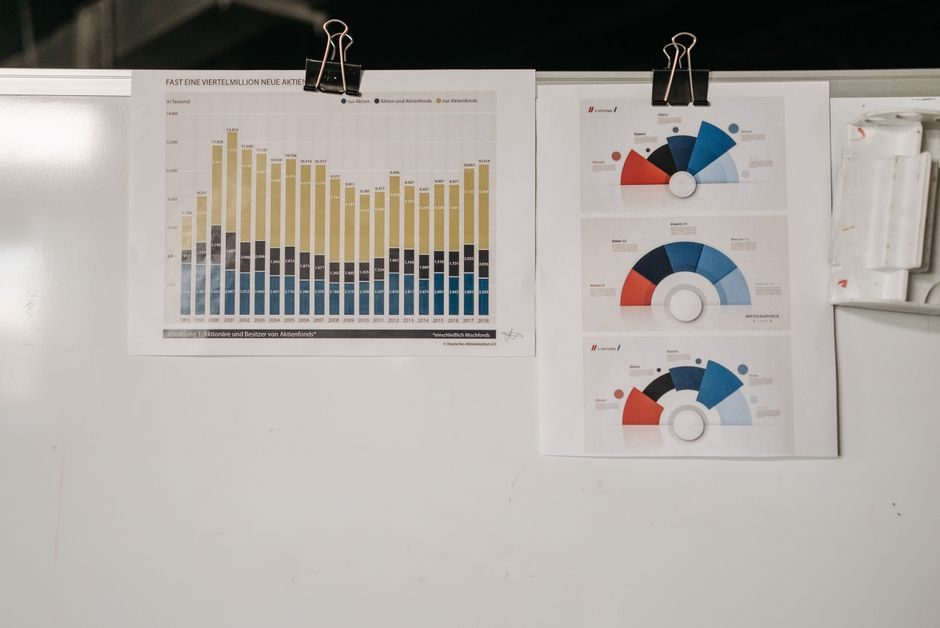
Reading charts clearly
Charts convey risk, trends, and comparisons. Learn to read axes, scales, and legends, and check if the data source and time frame are stated. Misleading visuals often hinge on subtle scale manipulations. rooms and property to rent in the USA are useful for journalists traveling to cover health stories and conferences.
Look for confidence intervals, sample sizes, and whether the chart summarizes the main point without oversimplification.
When in doubt, read the accompanying text to confirm that the graphic supports the headline.
- Interpret axes and units
- Check data source and time frame
- Look for uncertainty indicators
Charts can support or distort a story depending on design choices and annotations. Evaluate whether the graphic helps you understand risk in concrete terms, such as how many people out of 100 are affected.
Be wary of absolute numbers without context—percentages matter only with a baseline.
Use the visual cue to decide if further reading is needed.
Ethical reporting in health journalism
Transparency in sourcing practices
Ethics start with transparent sourcing. Explain how information was obtained, who provided it, and why sources are credible. This clarity helps readers judge bias and context. USA obituaries
- Detail the steps taken to verify major claims in the story.
- Provide a brief note on any unsettled questions that remain after publication.
Describe any limitations or uncertainties in the data to avoid overstating conclusions. When possible, cite independent experts or institutions to corroborate findings.
Be explicit about potential conflicts of interest and how they were mitigated during reporting to preserve trust and accountability.
- Identify primary sources and confirm their role
- Disclose any financial or professional ties
- Explain how competing viewpoints were considered
- State what was not known or verified at publication
Data privacy and health stories

Protecting patient identities
Health reporting often involves sensitive information. Journalists should anonymize cases to prevent identification when consent is limited. Avoid linking demographics in a way that could reveal a person’s identity.
Describe how data is handled, stored, and shared within the newsroom. Use secure channels and minimize access to raw data during editorial reviews.
Include a note on the public interest and balance it with individual privacy rights to maintain ethical standards in every health feature.
- Blur or omit identifying details
- Limit data access to essential staff
- Use aggregated data to illustrate trends
- Obtain consent when feasible before publishing details
Public health communication in crises
Timeliness without distortion
In crises, speed matters but accuracy matters more. Explain what is known, what is uncertain, and what steps authorities are taking. Delays to verify facts can prevent misinformation from spreading.
Provide practical guidance tailored to the moment, such as how to seek verified alerts or where to find official updates. Use plain language and avoid alarmist framing.
Show how different agencies coordinate, highlighting any gaps that affect public behavior and safety.
- Clarify what officials are advising and why
- Offer step-by-step actions for readers
- Share reliable where-to-check resources
- Avoid sensational headlines that oversimplify complex evidence
Balancing speed and accuracy in breaking news

Verifying claims under pressure
Breaking news requires rapid checks. Establish a pre-existing checklist for common claims (numbers, timelines, sources) to speed validation.
- Create a standardized verification workflow
- Assign a contingency editor for rapid updates
Publish provisional information with clear qualifiers when certainty is low, and update as verification completes.
Document the verification steps taken and any changes to the story as it evolves.
- Use separate lanes for confirmed vs. unverified facts
- Verify with multiple independent sources
- Annotate updates to help readers follow changes
- Avoid guessing about outcomes or motives
Frequently asked questions
How can I tell if a health claim is credible?Look for specific sources, independent verification, and whether the data is presented with limitations. If a claim rests on a single study or an abstract, approach it cautiously and seek broader context.
What should I do if a health story changes after publication?Newsrooms should publish updates with clear notes on what changed and why. Readers benefit from a concise summary of revisions and the new evidence driving them.
Why are some health stories about uncertainty?Health science often advances gradually, with evolving methods and data. Reports that acknowledge uncertainty help readers weigh risks without overreacting.
How can I use health news responsibly in daily decisions?Cross-check with official health authorities, consider the balance of benefits and risks, and recognize that individual circumstances may differ from reported averages.
Final reflections and next steps
Readers can expect ongoing, careful reporting that foregrounds clear context and practical guidance. The next step is to use the provided resources to verify new health information as it appears.
Add Kano News as a preferred source on Google


